


Blog
What Does a Permit to Work Receiver Actually Do?


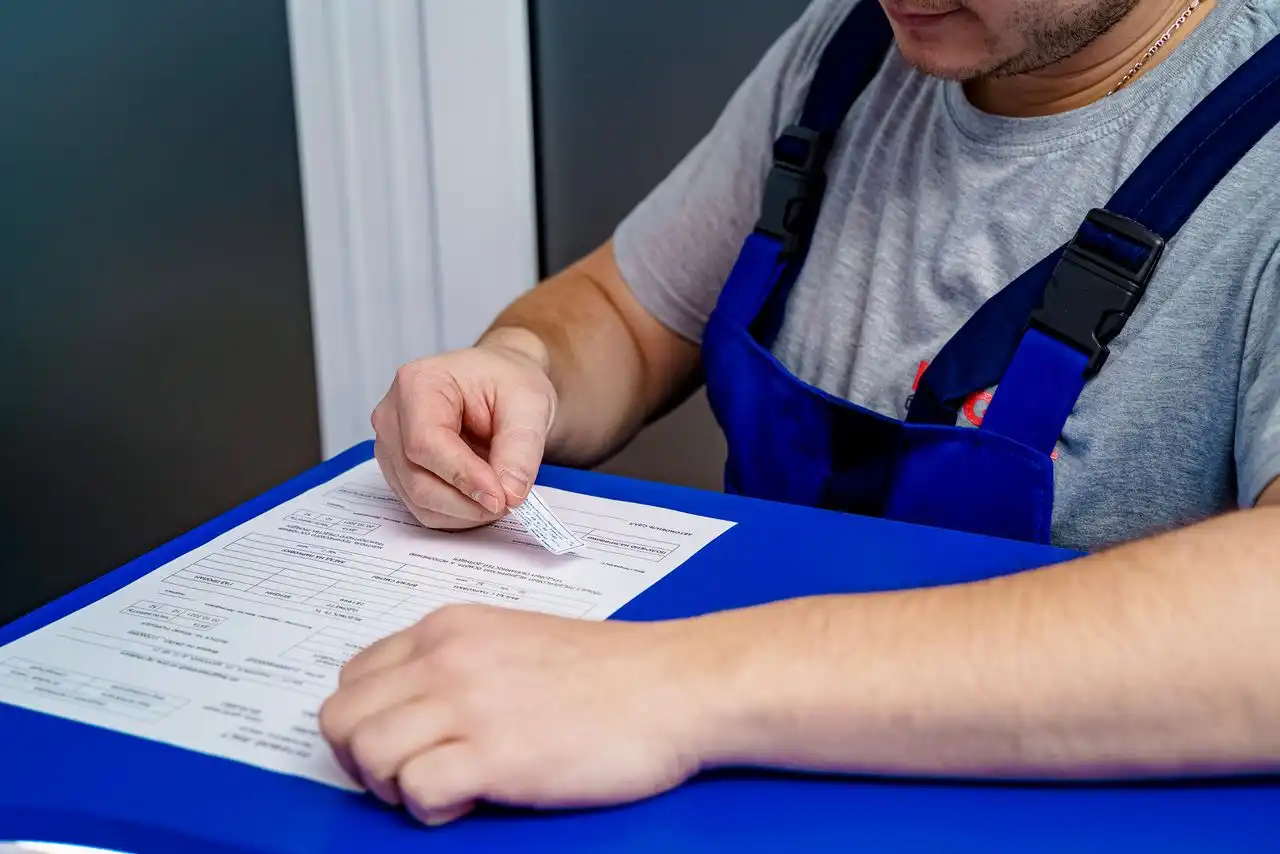
On paper, a permit to work receiver signs a form and takes it to the job. On a live gas plant or a busy construction site, they are the last line between a written control and a real one.
The receiver is the person who accepts the permit, briefs the crew, makes sure every condition on that paper is true at the workface, and stops the job the moment it is not. When permit systems fail, investigators almost always find a gap at this exact point: a handover nobody explained, an isolation nobody checked, a gas test that went stale over a break.
This guide explains what the receiver does at every stage of the permit, how the role fits with the issuer and other authorities, and what training gets you authorised on UAE and GCC sites.
What Is a Permit to Work System?
A permit to work (PTW) is a formal written system that controls high-risk, non-routine work. It defines the work, the hazards, the precautions, who is responsible and how long the authority lasts.
Common Permit Types
| Permit Type | Typical Work | Key Hazards |
| Hot work | Welding, grinding, cutting | Fire, explosion near hydrocarbons |
| Cold work | Mechanical maintenance, scaffolding | Stored energy, dropped objects |
| Confined space entry | Vessel, tank, pit or manhole entry | Toxic or oxygen-poor atmosphere, engulfment |
| Electrical and isolation | Switchgear, motor or panel work | Electric shock, arc flash |
| Excavation | Digging near buried services | Cable or pipe strike, collapse |
| Work at height | Roof, rack or tower work | Falls |
| Lifting | Critical or tandem lifts | Load drop, crane failure |
| Radiography | Weld testing with radioactive sources | Radiation exposure |
Many systems also use supporting certificates attached to the main permit, such as isolation, gas test and confined space entry certificates.
Who Does What in a PTW System
Job titles change from one operator to the next. The responsibilities stay much the same.
| Role | Also Called | Main Responsibility |
| Permit Issuer | Issuing Authority, Area Authority | Owns the area; confirms it is safe to release for work; issues and closes the permit |
| Permit Receiver | Performing Authority, Permit Holder | Accepts the permit; controls the crew and the job at the workface |
| Isolating Authority | Isolation Officer | Applies and removes mechanical, electrical or process isolations |
| Authorised Gas Tester | Gas Tester | Tests the atmosphere and records readings |
| Site Approver | Area or Plant Supervisor | Approves high-risk permits and checks simultaneous operations |
| Fire Watch or Standby Person | Hole Watch | Monitors the job and raises the alarm |
Short version: the issuer says the area is ready. The receiver makes sure the work stays safe.
The Receiver’s Duties at Each Stage of the Permit
Stage 1: Planning and Request
- Describe the job clearly: exact equipment tag, location, method and tools.
- Prepare or review the task risk assessment or job safety analysis. A solid method helps here, and our step-by-step guide to risk assessment on Dubai sites covers it.
- Identify required certificates: isolation, gas test, confined space, excavation.
Stage 2: Joint Site Inspection
The receiver walks the site with the issuer. Together they confirm:
- The right equipment is isolated, drained, vented or purged.
- Locks and tags are in place. Strong lockout tagout procedures matter most here.
- Gas test results are within limits and recorded with the time.
- Barriers, signs and emergency equipment are ready.
If anything does not match the permit, the receiver does not sign. Full stop.
Stage 3: Accepting the Permit
By signing, the receiver confirms they understand the hazards and controls and will make sure the crew follows them. This signature carries real legal and professional weight.
Stage 4: Briefing the Crew
- Run a toolbox talk at the workface, not in the canteen.
- Explain the permit conditions in a language the crew understands.
- Check understanding by asking questions, not by asking “Clear?”
- Record attendance on the permit or briefing sheet.
Stage 5: Supervising the Work
- Display the permit at the worksite.
- Stay at or near the job.
- Watch for changes: new hazards, weather, nearby work, alarms.
- Keep gas monitoring going where the permit requires it.
- Use stop work authority without hesitation.
Stage 6: Suspension, Handover and Revalidation
This is where most permit failures happen. The receiver must:
- Suspend the permit at breaks, at shift end, or when conditions change.
- Hand over in person to the next receiver, with the permit and isolation status explained.
- Make sure re-testing happens before work restarts, especially for gas tests and confined spaces.
A famous lesson: the 1988 Piper Alpha disaster in the North Sea involved a permit and shift handover failure, where a pump was restarted without the night shift knowing its safety valve had been removed. That accident still shapes PTW systems worldwide.
Stage 7: Close-Out
- Confirm the work is complete or safely paused.
- Remove tools, waste and temporary equipment.
- Return the site in a safe condition.
- Sign the permit back to the issuer so isolations can be removed in the right order.
 UAE and GCC Site Conditions That Change the Receiver’s Job
Generic PTW guides ignore the Gulf environment. These are the conditions receivers deal with every week.
| Local Factor | Impact on the Permit | Receiver Action |
| UAE midday work break, 12:30 pm to 3:00 pm, 15 June to 15 September | Outdoor work stops mid-shift | Suspend permits, re-check site and re-test gas before restart |
| Extreme heat above 45°C | Heat stress, faster fatigue, more vapour from hydrocarbons | Build rest and hydration into the plan; see our heat stress training guide |
| Sandstorms and high wind | Unsafe lifting and work at height, poor visibility | Suspend lifting and height permits at set wind limits |
| Ramadan working hours | Shorter shifts and changed handover times | Adjust handover schedules and briefings |
| Multilingual crews | Instructions misunderstood | Brief in the crew’s language; use pictures and demonstrations |
| Simultaneous operations on brownfield plants | Clashes between hot work and nearby process activity | Confirm SIMOPS checks with the issuer |
| High-rise construction in Dubai and Abu Dhabi | Hot work at height near flammable cladding or materials | Fire watch, fire blankets and post-work checks |
Supervisors running hot work should also read our guide to fire safety training for Dubai site supervisors.
Permit-to-Application Checklist for Receivers
Use this as a quick check before you sign.
| Permit Type | Receiver Must Verify Before Signing |
| Hot work | Gas test in limits, combustibles removed or covered, fire watch and extinguisher in place |
| Confined space | Isolation, ventilation, continuous gas monitoring, standby person, rescue plan. Our confined space entry training guide covers the detail |
| Electrical | Isolation proved dead, locks applied, test equipment checked |
| Excavation | Service drawings checked, scanning done, shoring or battering in place |
| Work at height | Inspected scaffold tag, harness and anchor points, exclusion zone below |
| Lifting | Approved lift plan, inspected gear, competent rigger and signaller, wind speed in limits |
A Simple Handover Script for Receivers
Most handover failures come from rushed, unstructured conversations at shift change. Use this five-point script every time, face to face, at the worksite:
- Job status: “This is what is done, this is what is left.”
- Isolations: “These points are isolated and locked. These are not.”
- Atmosphere: “Last gas test was at this time, with these readings. Re-test before restart.”
- Changes: “This changed during my shift: weather, nearby work, equipment condition.”
- Open concerns: “This is what worries me about this job.”
Both receivers sign the permit or handover log. If the incoming receiver is not satisfied, the work stays suspended until they are.
The Cost of Getting the Receiver Role Wrong
A permit system is only as strong as the person holding it at the workface. Compare the two scenarios.
| Factor | Untrained Receiver | Trained and Authorised Receiver |
| Permit errors | Frequent, often unnoticed | Caught before signing |
| Operator audit findings | Repeated | Reduced |
| Stop-work decisions | Delayed or avoided | Made early |
| Rework and delays | High | Lower |
| Incident exposure | High | Reduced |
| Client confidence | Weak, risk of removal from site | Strong, faster permit approvals |
Here is the business case in plain terms: one failed permit audit can remove a contractor from an operator’s site for days. Training a supervisor costs far less than a single day of a stood-down crew.
How to Become a Permit to Work Receiver
Typical Requirements on GCC Sites
- A supervisory role, such as foreman, supervisor or site engineer
- Site-specific PTW training and a written or practical test set by the operator or main contractor
- Formal authorisation, often renewed every few years
- A foundation in general health and safety
Recommended Training Path
- Foundation: IOSH Working Safely for crew members and new supervisors.
- Supervisor: IOSH Managing Safely for anyone who will sign permits and lead crews.
- Industrial standards: OSHA 30 Hours General Industry for plants and facilities that follow US-style practices.
- Oil and gas: the Level 3 International Diploma in Oil and Gas Safety Management for receivers working on process plants.
- Site authorisation: the operator’s own PTW course and assessment.
Frequently Asked Questions
Is the permit receiver the same as the permit holder?
In most systems, yes. Some operators use “receiver”, “holder” and “performing authority” for the same role. Always check your site’s PTW procedure.
Can a receiver refuse a permit?
Yes, and they should if site conditions do not match the permit. A receiver who signs a permit they do not believe in takes on the risk.
How long is a permit valid?
It depends on the site procedure. Many permits are valid for one shift and need revalidation or reissue for the next.
Does a receiver need to stay at the job?
The receiver should stay at or near the workface, or hand over formally to another authorised person.
Who closes the permit?
The receiver signs the work as complete and hands it back. The issuer accepts the area and closes the permit.
Train Your Supervisors With Ahlan Safety
Ahlan Safety Training Centre has spent 16 years training supervisors and HSE teams for more than 250 companies across the UAE and GCC. We run IOSH, OSHA and oil and gas safety courses in classroom and virtual formats, and support teams in Doha and Ras Laffan through our Qatar training page. Need a corporate batch built around your site’s permit system? Request a corporate training quote or WhatsApp +971 55 9567556.