


Blog
Level 3 Oil and Gas Safety Diploma: Who Is It For?


Oil and gas sites in the Gulf do not hire safety staff on enthusiasm. They want proof that you understand hydrocarbons, process hazards, permits, fire and emergency response before you set foot inside the fence.
That is the gap a Level 3 Oil and Gas Safety Diploma fills. It sits between a short awareness course and a full professional diploma. It is affordable, flexible and focused entirely on the hazards of upstream, midstream and downstream operations.
But it is not for everyone. This guide explains exactly who benefits, who should pick a different course, what you study, what it costs and how it fits a career in the UAE, Saudi Arabia, Qatar, Oman, Kuwait and Bahrain.
What the Level 3 Oil and Gas Safety Diploma Covers
The Level 3 International Diploma in Oil and Gas Safety Management is awarded through OSHE London Academy and delivered by Ahlan Safety.
Course Facts
| Attribute | Detail |
| Level | Level 3 International Diploma |
| Study hours | 360 hours |
| Recommended duration | 6 to 12 months, depending on study mode |
| Delivery | Full-time, part-time or online |
| Assessment | Module assessments and unit tests, graded Pass or Refer per unit |
| Overall grades | Distinction, Credit, Pass |
| Entry requirements | Age 18+, no formal qualifications, working English (IELTS 5.0 or higher recommended) |
| Listed fee (October 2026) | AED 1,945 (£400) |
The 10 Units
- Introduction to Oil and Gas Industry Operations
- Health and Safety in Oil and Gas Extraction and Production
- Hazard Identification and Risk Management in Oil and Gas
- Offshore and Onshore Safety Management
- Fire Safety and Emergency Response Planning
- Process Safety and Hazardous Materials Handling
- Safety Legislation and International Standards in Oil and Gas
- Environmental Protection and Pollution Control
- Incident Investigation and Reporting
- Safety Culture and Human Factors in Oil and Gas
Who Is This Diploma For?
1. New Safety Officers Targeting the Energy Sector
You have a general safety certificate and want to move into oil and gas. Recruiters for energy projects look for sector knowledge. This diploma gives you the vocabulary: H2S, LEL, PSV, MOC, SIMOPS, ESD. If you are still building your first credentials, our guide on how to become a certified safety officer covers the earlier steps.
2. Operators and Technicians Moving Into Supervision
Process operators, maintenance technicians and instrument techs often know the plant better than the safety team. What they lack is the safety management framework. Units on risk management, incident investigation and safety culture close that gap.
3. Construction HSE Staff Switching to Oil and Gas
Many HSE officers in the UAE start on building sites. Oil and gas projects pay well, but the hazards are different. Units 1, 4 and 6 do the heavy lifting here.
4. Supervisors and Foremen on Plant Shutdowns
Turnarounds bring hundreds of contractors onto a live plant. Supervisors who understand process hazards make fewer permit mistakes and catch more unsafe conditions.
5. Engineers Who Need Safety Management Knowledge
Mechanical, process and electrical engineers often lead tasks with major hazards. A structured safety diploma helps them speak HSE language in design reviews and HAZOPs.
6. Career Changers and Overseas Applicants
Professionals in India, Pakistan, the Philippines or Africa preparing for GCC energy roles use this diploma to show sector knowledge on their CV before they relocate.
Who Should Pick a Different Course?
Be honest about where you are. This diploma is not the best choice if:
| Your Situation | Better Option |
| You need a general entry-level safety qualification for any sector | Level 3 International Diploma in Occupational Safety, Health and Environment |
| You already manage a safety team | OSHE Level 5 International Diploma in OSH and Environment Leadership and Management |
| Your client asks for US-style standards | OSHA 30 Hours General Industry |
| You supervise people across many sectors | IOSH Managing Safely |
| You need mandatory site tickets such as H2S or offshore survival | Operator-approved specialist courses (this diploma does not replace them) |
Unit-to-Job Matching Table
This is the specification-to-application view. Match the units to the job you want.
| Target Job | Most Relevant Units | Why |
| HSE officer, onshore gas plant | 2, 3, 5, 6 | Production hazards, risk, fire, process safety |
| HSE officer, offshore platform | 1, 4, 5, 10 | Offshore operations, emergency response, human factors |
| Refinery shutdown supervisor | 3, 6, 9 | Risk, hazardous materials, investigation |
| Environmental coordinator, terminal or port | 7, 8 | Legislation, pollution control |
| Fire and emergency coordinator | 5, 9 | Emergency planning and investigation |
| Contractor HSE advisor | 3, 7, 10 | Risk, standards, culture |
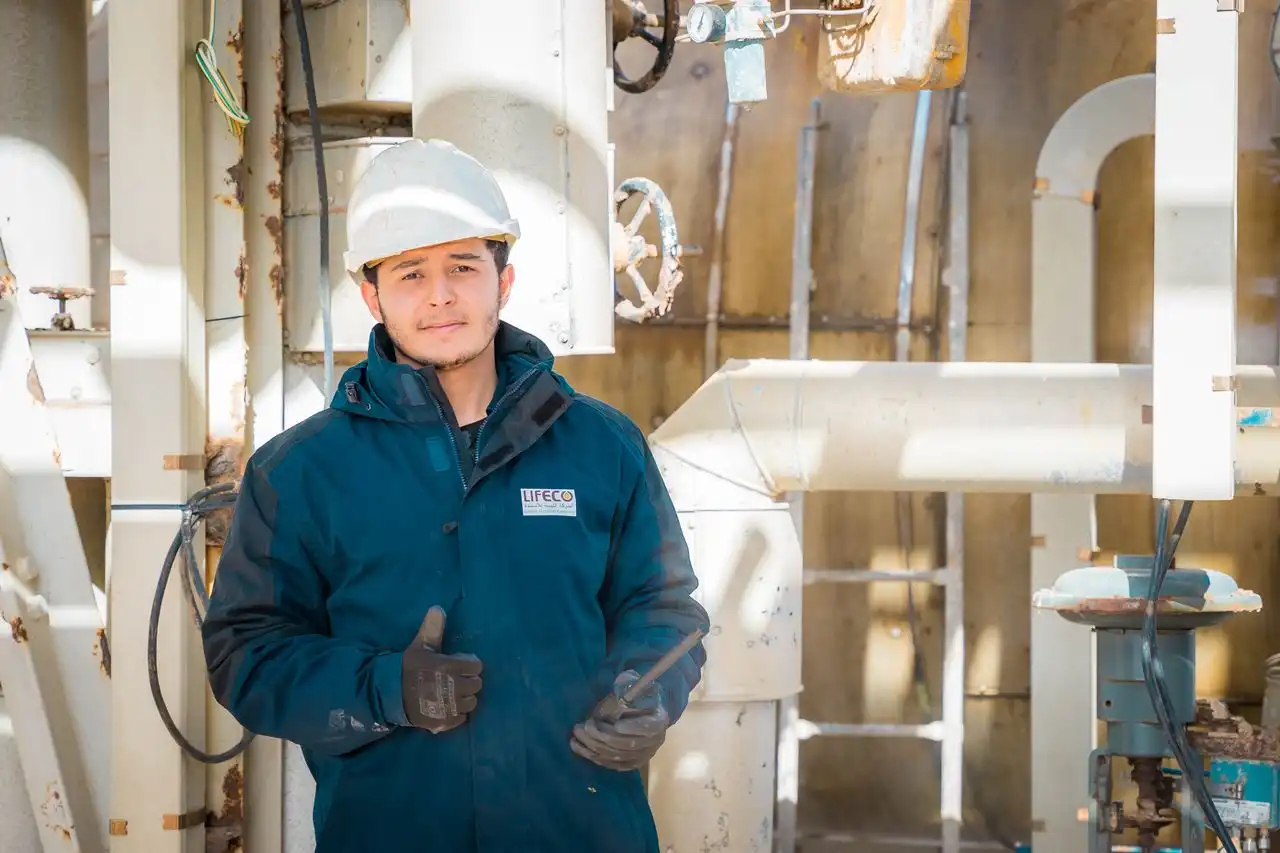 GCC Oil and Gas Environment Matrix
Most course pages describe oil and gas safety in general terms. Gulf sites have their own pressures.
| GCC Site Type | Example Locations | Dominant Hazards | Diploma Units That Apply |
| Onshore sour gas fields | Abu Dhabi interior, Eastern Province of Saudi Arabia | H2S, high pressure, heat stress | 2, 3, 6 |
| Offshore platforms and islands | Arabian Gulf fields, Qatar North Field | Fire, evacuation, confined workspaces | 4, 5 |
| Refineries and petrochemical hubs | Ruwais, Jubail, Yanbu, Sohar | Process safety, hot work, turnarounds | 3, 6, 9 |
| Storage and export terminals | Fujairah, Ras Tanura, Mina Al Ahmadi | Tank fires, loading operations, spills | 5, 8 |
| Downstream fuel and LPG distribution | City fuel stations, LPG bottling plants | Vapour ignition, public exposure | 5, 6, 7 |
Climate Factors You Will Study in Practice
- Heat: summer ambient temperatures above 45°C raise vapour generation and heat stress risk.
- Dust and sand: clogged filters and instrument faults affect equipment reliability.
- Coastal humidity: corrosion of pipework and structures drives integrity programmes.
- Midday break rules: the UAE summer midday work ban shapes how outdoor work and permits are scheduled.
Cost and ROI vs Other Routes
| Option | Listed Fee at Ahlan Safety (Oct 2026) | Sector Focus | Depth |
| Level 3 Oil and Gas Safety Diploma | AED 1,945 | Oil and gas | 360 hours, 10 units |
| Level 3 OSH and Environment Diploma | £400 | General | 360 hours |
| OSHA 30 General Industry | £300 | General industry | 30 hours |
| OSHE Level 5 Diploma | £500 | Leadership | Management level |
Payback Logic
At under AED 2,000, the diploma costs less than many single-week specialist courses. If it helps you move from a general safety officer role into an energy-sector role, the salary difference usually covers the fee within the first month or two. Our UAE safety officer salary guide shows how pay changes with sector and certification. For a wider fee comparison, see our UAE safety course price breakdown.
How to Get the Most From the Diploma
Study Tips
- Link every unit to a real site: your plant, a past project or a published incident report.
- Learn the abbreviations early. Oil and gas safety is full of them.
- Treat unit tests as practice for interviews. Recruiters ask the same questions.
Next Steps After Level 3
- Gain 1 to 2 years of site experience.
- Add mandatory site tickets your target operator requires.
- Move to Level 5 for supervisory roles, then Level 6 for professional recognition.
- Consider process safety at Level 7 once you lead HSE on a process plant.
See the full progression in our OSHE diploma range.
A Realistic Study Plan for Working Professionals
Most learners on this diploma work long shifts or rotations. Here is a plan that fits a 6 to 9 month finish:
| Month | Focus | Weekly Time |
| 1 | Units 1 and 2: operations and production hazards | 8 to 10 hours |
| 2 | Units 3 and 4: risk management, onshore and offshore safety | 8 to 10 hours |
| 3 | Unit 5: fire safety and emergency response | 8 hours |
| 4 | Unit 6: process safety and hazardous materials | 10 hours |
| 5 | Units 7 and 8: legislation, standards and environment | 8 hours |
| 6 | Units 9 and 10: investigation and human factors | 8 hours |
| 7 to 9 | Unit tests, re-sits if needed, revision | As needed |
On a 28/28 rotation? Load the heavier units into your home weeks and use site weeks to collect real examples.
Interview Questions This Diploma Prepares You For
Energy-sector HSE interviews in the Gulf often include questions like these:
- What is the difference between LEL and UEL, and why does it matter for hot work?
- How would you respond to an H2S alarm in a process area?
- What is management of change, and when does it apply?
- How do you investigate a near miss?
- What makes a permit to work system fail?
If you can answer these confidently with examples, the diploma has done its job.
Frequently Asked Questions
Do I need experience to join the Level 3 Oil and Gas Safety Diploma?
No formal experience or qualifications are required. You must be at least 18 and able to study in English.
How long does it take?
Plan for 6 to 12 months, depending on whether you study full-time, part-time or online.
Is there an exam?
You complete module assessments and unit tests. Each unit is graded Pass or Refer, with Distinction, Credit and Pass overall grades.
Will this diploma get me an offshore job?
It shows sector knowledge on your CV. Offshore employers also require specific mandatory safety and survival tickets, which you take separately.
Can I study online from Saudi Arabia or Qatar?
Yes. Online study is available, so learners across the GCC can join.
Enrol With Ahlan Safety
Ahlan Safety Training Centre has spent 16 years helping safety professionals break into and grow within the GCC energy sector, working with more than 250 companies across the region. Learners on Saudi Arabia’s Eastern Province projects can find local support on our Saudi Arabia page. Ready to start? Ask for a free trial lesson and enrolment advice or WhatsApp +971 55 9567556.